

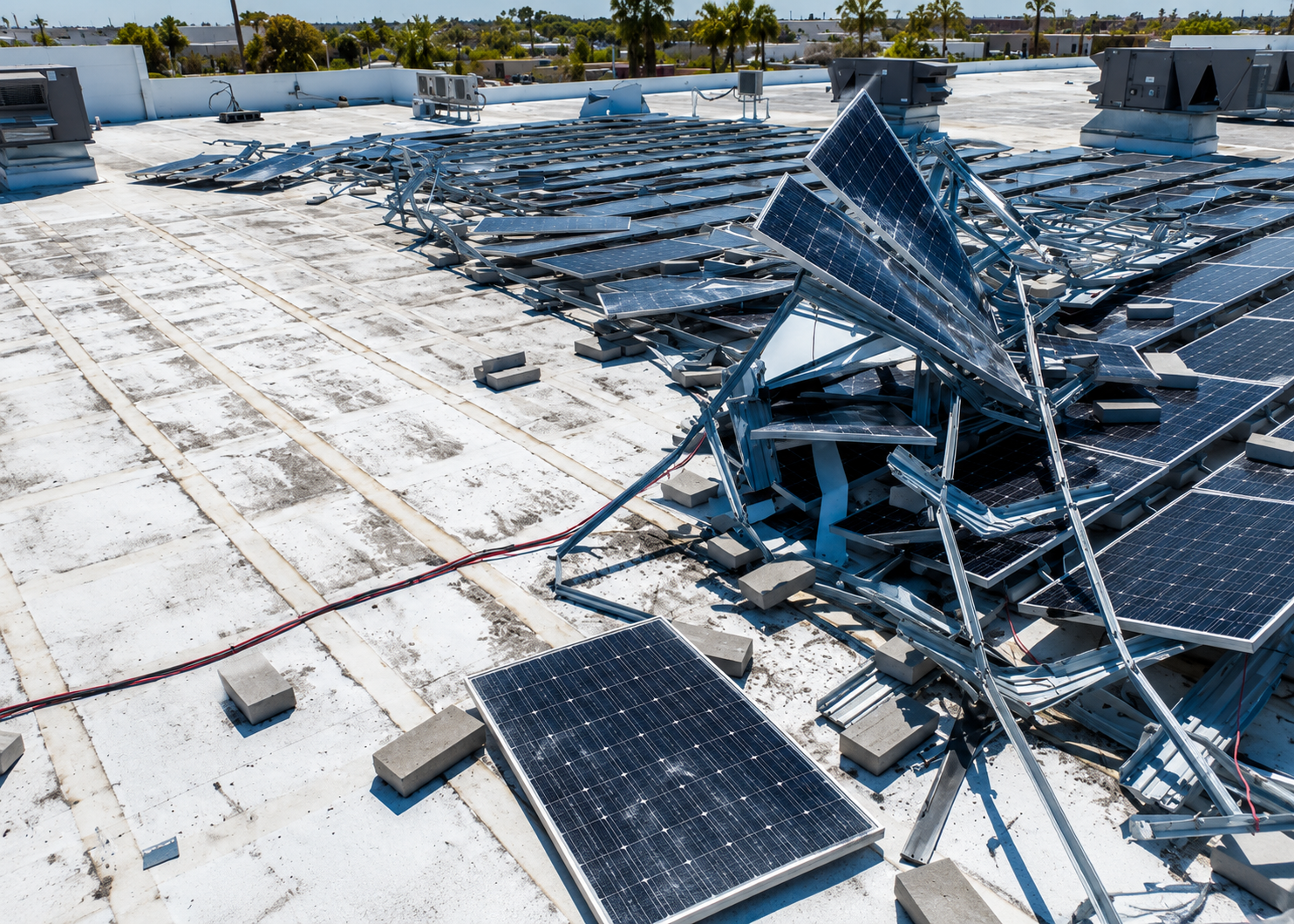
Challenges in Adjusting Renewable Energy Project Losses in the Region
The region has seen significant growth in renewable energy projects, especially solar and wind. With this growth, new types of insurance claims have emerged. These claims differ from traditional property or machinery breakdown losses because a renewable energy project combines electrical engineering, specialized equipment, operation and maintenance contracts, expected performance, grid connection and global supply chains.
Adjusting these losses requires more than pricing damaged components. The incident may involve inverter failure, damaged solar panels, mounting system defects, storm or wind damage, electrical fire, transformer failure or partial shutdown affecting expected energy production.
Risk Characteristics in Solar Projects
Solar projects are exposed to a range of technical and environmental risks, including panel damage, inverter failure, cabling issues, overheating, sandstorms, poor installation, design errors or inadequate maintenance. In some cases, damage may appear gradually, making it important to distinguish between a sudden insured event and progressive deterioration or pre-existing defects.
The loss assessment does not stop at replacing a damaged panel or device. It must also consider production impact, downtime, system efficiency after repair, spare part availability and whether replacement components need to be imported.
Challenges in Wind Projects
Wind energy projects present different challenges, including blade damage, gearbox failure, generator issues, control system problems and tower or foundation concerns. Inspection and repair can be more complicated due to height, specialized cranes, weather conditions and safety requirements.
When a wind turbine loss occurs, visible damage may only be part of the problem. The adjuster may need to review operational data, maintenance records, wind conditions, manufacturer reports and system alarms issued before the incident.
The Financial Challenge: Lost Production and Interruption
In renewable energy projects, lost production can be as important as physical damage. Claims may include revenue loss or reduced generation during the repair period. Operational data analysis becomes essential, including historical generation, forecasts, power purchase agreements, actual downtime and whether the project can recover lost production later.
It is important to separate production loss directly caused by the insured event from reductions linked to weather, lower solar irradiation, grid restrictions or unrelated operational issues.
Documents That Support the Adjustment
- The insurance policy, including machinery breakdown and business interruption sections.
- EPC and operation and maintenance contracts.
- Maintenance reports and performance records before and after the incident.
- Daily or monthly generation data.
- Manufacturer or supplier reports.
- Repair or replacement quotations and lead times.
- Site photographs, field reports and technical inspection findings.
The Role of Independent Technical Inspection
Technical inspection in renewable energy claims must connect physical damage with operational performance. The key question is not only what was damaged, but why it was damaged, whether the damage resulted from a sudden insured event and what the real impact was on energy production. This analysis helps insurers and reinsurers evaluate the claim objectively.
Conclusion
Renewable energy claims require a combination of engineering expertise, insurance coverage understanding and operational performance analysis. As these projects continue to expand across the region, the need for technically capable and independent loss adjusters will continue to grow.
River City Technical Consultants supports insurers, reinsurers and brokers in renewable energy losses through technical surveys, cause-of-loss analysis, document review and clear reporting that supports fair settlement.